


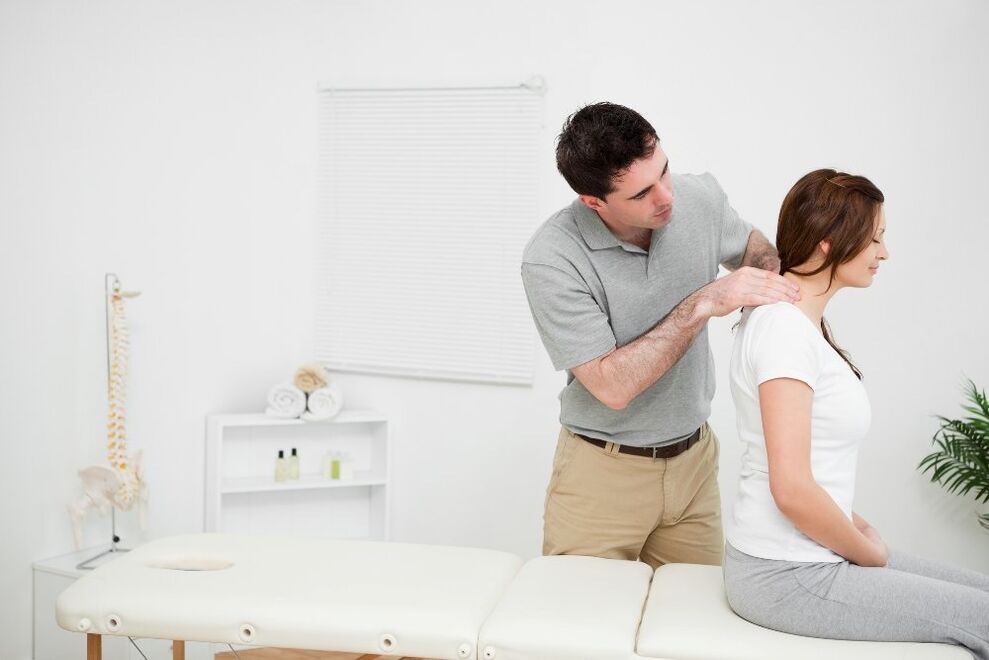
Osteochondrosis of the cervical spine (Osteochondroz) is a degenerative-dystrophic lesion of the intervertebral disc, as a result of which the disc itself, vertebrae and joints of the cervical spine are damaged, and a decrease in the height of the intervertebral disc is observed.
The disease progresses if left untreated and can cause headaches, poor circulation and even hernias.
Many people know firsthand how to treat osteochondrosis of the cervical spine - this disease is quite common.Women are particularly vulnerable to it, because due to their anatomical structure, their shoulder girdle is not as strong as men's.
Characteristics of cervical osteochondrosis
The neck is a very mobile part of the body and is subject to significant pressure (always holding the head).In addition, the size of the vertebrae here is much smaller than the rest of the spine.The large vessels that supply the brain pass through the neck, so poor circulation caused by displacement of the vertebral structure and violation of the lumen of blood vessels can cause dizziness and headaches.In addition, there are many nerve endings, the violation of which gives a strong painful sensation.
Methods for treating cervical osteochondrosis
How to treat osteochondrosis of the cervical spine?The main methods are the use of drugs, physical therapy, physiotherapy and massage.Each method is used at different stages of the disease, in combination with others or separately.
The treatment of this disease is most actively carried out with the help of drug therapy, the purpose of which is to relieve inflammation and spasms, relieve pain, restore blood microcirculation and improve brain circulation.The main drug to relieve muscle spasms and treat the inflammatory process is a non-steroidal muscle relaxant.Vasodilators are used to increase blood circulation.Vitamin B is also prescribed, which improves metabolic processes and is involved in the synthesis of neurotransmitters.
Massage is prescribed if there is no aggravation of the disease, or when the health condition improves after using medicines.
Physiotherapy is also used - mainly amplipulse therapy and electrophoresis with novocaine in the cervical region.
Exercise therapy and gymnastics are prescribed in the acute stage in the form of static exercises, and when the symptoms of the disease subside to strengthen the muscles and restore the mobility of the cervical spine.
Is it possible to treat cervical osteochondrosis at home?Of course, yes, but it is better to combine folk remedies at home with medicines prescribed by a doctor.Self-medication includes lying on a special applicator, using a heating pad and compress (with iodine, alcohol, mustard), and taking a warm bath with herbs.